
Required Data for Cooling Tower Selection
Required Data for Cooling Tower Selection
Cooling towers are typically selected for the hottest design summer conditions unless stated otherwise. Accurate selection requires combining process duty, climate conditions, and site constraints. The clearer the inputs, the more reliable and economical the tower sizing will be.
1) Process Inputs (Mandatory)
- Circulating water flow rate: m³/h (preferred) or heat duty (kW, kcal/h)
- Hot water inlet temperature: Tin (°C)
- Cold water outlet temperature: Tout (°C)
- Operating profile: continuous vs. intermittent; constant vs. variable load
2) Climate Data (Design Condition)
Tower capacity is strongly driven by wet-bulb temperature, which represents the practical cooling limit for evaporative systems.
- Wet-bulb temperature (°C) – mandatory
- Dry-bulb temperature (°C) – recommended
- Relative humidity (%) – recommended
- Altitude / barometric pressure – important at high elevations
3) Key Concepts: Range and Approach
Range is the temperature drop across the tower: Range = Tin − Tout.
Approach is the difference between cold water temperature and wet-bulb: Approach = Tout − Twb. Lower approach usually means a larger tower and higher cost.
4) Water Quality and Fouling Factors
Selection is not only thermal. Water quality and fouling potential affect fill/nozzle configuration and maintenance needs.
- Water analysis: conductivity, hardness, pH, total suspended solids (TSS)
- Contamination sources: oil, scale, solids, biological growth
- Water treatment: inhibitors, biocides, pH control
- Blowdown strategy to control cycles of concentration
5) Mechanical and Site Constraints
- Location and airflow: risk of recirculation, obstructions, intake/exhaust clearance
- Footprint limits: length/width/height constraints and service access
- Noise limit: sensitive sites may require low-noise options
- Electrical: supply and VFD requirement
- Freeze risk: winter operation plan (heaters, glycol, controls)
Example Input Set
Example: Flow 120 m³/h, Tin=40°C, Tout=30°C, wet-bulb=24°C, altitude 200 m, continuous operation, moderately fouling water.
Summary
Provide flow and temperatures, wet-bulb design, water quality, and site constraints together. With complete inputs, tower type and configuration (open/closed circuit, fill, fan/pump, controls) can be selected reliably.
Bildergalerie
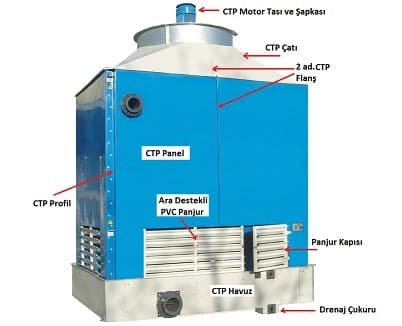
Required data for cooling tower selection
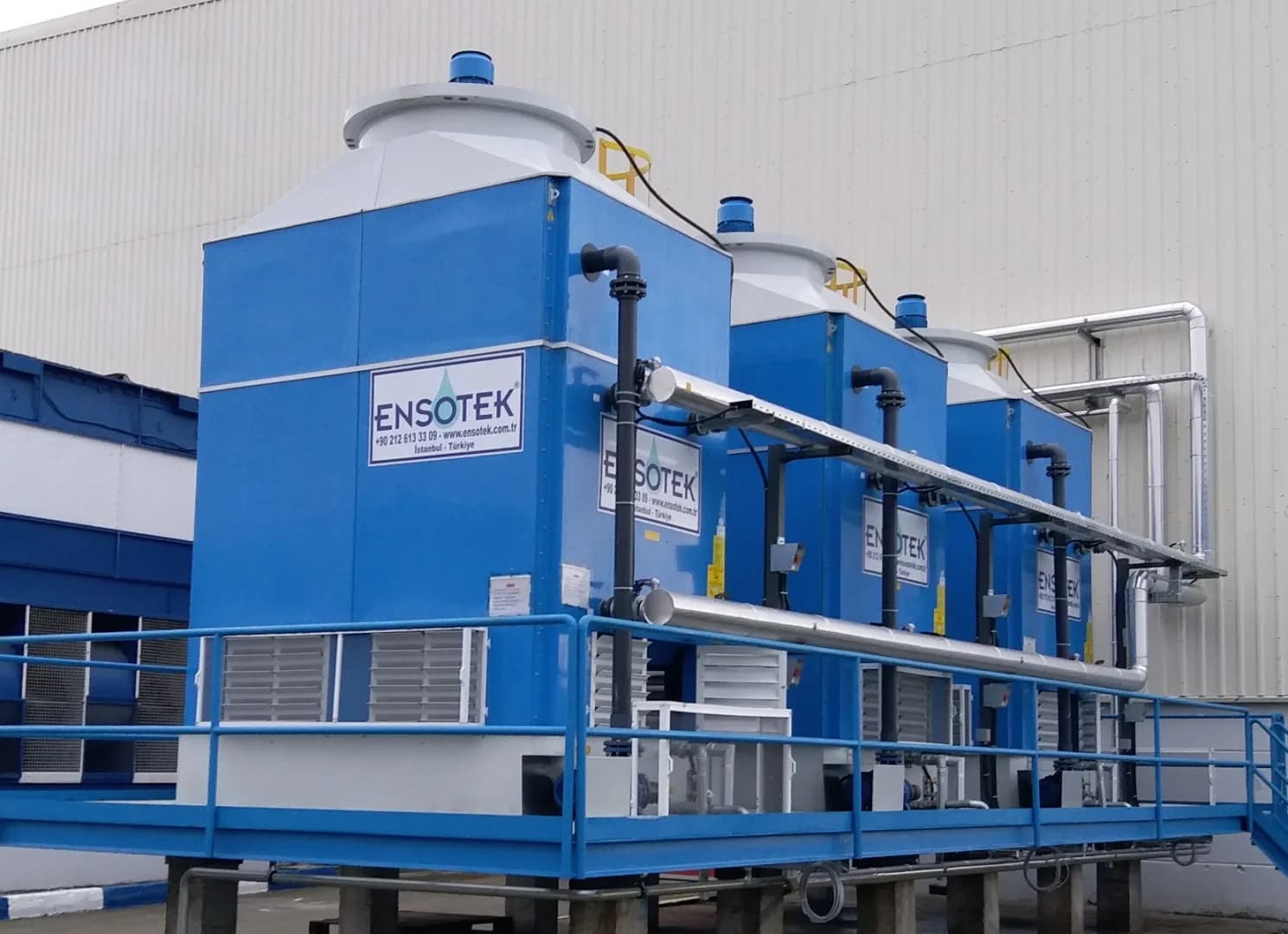
Design data and approach target
Water quality and operating factors