
Closed-Circuit Cooling Tower Working Principle
Closed-Circuit Cooling Tower Working Principle
What Is a Closed-Circuit Cooling Tower?
Closed-circuit (closed-loop) cooling towers are used when the process fluid must remain clean and isolated from ambient air. The process fluid circulates inside a metal coil (heat exchanger). Airflow and a spray-water loop remove heat from the coil surface, cooling the internal process fluid indirectly.
How It Works (Step-by-Step)
- Hot process fluid enters the coil and flows through the heat-exchanger tubes.
- Airflow is induced by the fan and passes over the coil surface.
- Spray-water loop operates: recirculating water is pumped to nozzles and sprayed over the coil.
- Heat transfer occurs: heat moves from the process fluid to the tube wall and then to spray water and air.
- Cooled process fluid returns to the process while spray water returns to the basin.
Does Evaporation Occur?
Evaporation does not occur in the closed process loop because the process fluid is contained inside the coil. However, the spray-water loop is exposed to air, so some evaporation occurs there and contributes to heat rejection.
Free Cooling (Dry Cooler) Mode
In cold weather, the tower can often be operated with the spray-water system turned off, using air-only heat rejection—similar to a dry cooler. This is commonly called free cooling and can reduce energy consumption under favorable ambient conditions.
Freeze Risk and Protection Measures
If the system is stopped in winter conditions, fluid inside the coil may freeze and damage tubes. Common mitigation strategies include:
- Draining the coil during shutdown periods.
- Low-flow circulation to keep fluid moving.
- Glycol/antifreeze to lower freezing point.
- Control logic (fan staging, bypass, setpoints) to prevent coil icing.
Energy Consumption
Electrical consumption is mainly driven by the fan and the spray-water pump. Optimized equipment selection and controls can improve operating cost depending on climate, load profile, and required approach.
Where It Is Used / Key Benefits
- Clean process fluid: ideal for sensitive processes and equipment.
- Reduced contamination risk: process loop is isolated from ambient air.
- Seasonal efficiency: free cooling opportunities in cooler climates.
- Stable operation: controlled process-side water quality.
Summary
Closed-circuit towers cool process fluids indirectly through a coil using airflow and spray water. Evaporation occurs on the spray-water side, not in the process loop. Free cooling can reduce energy use in cold seasons, while freeze protection measures (drain, circulation, glycol, controls) are critical for winter reliability.
Bildergalerie
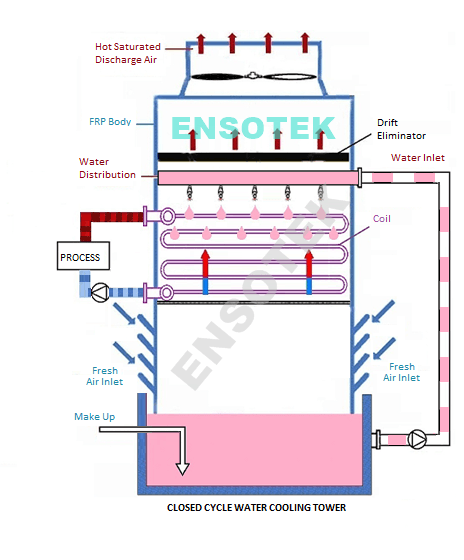
Closed-circuit cooling tower working principle
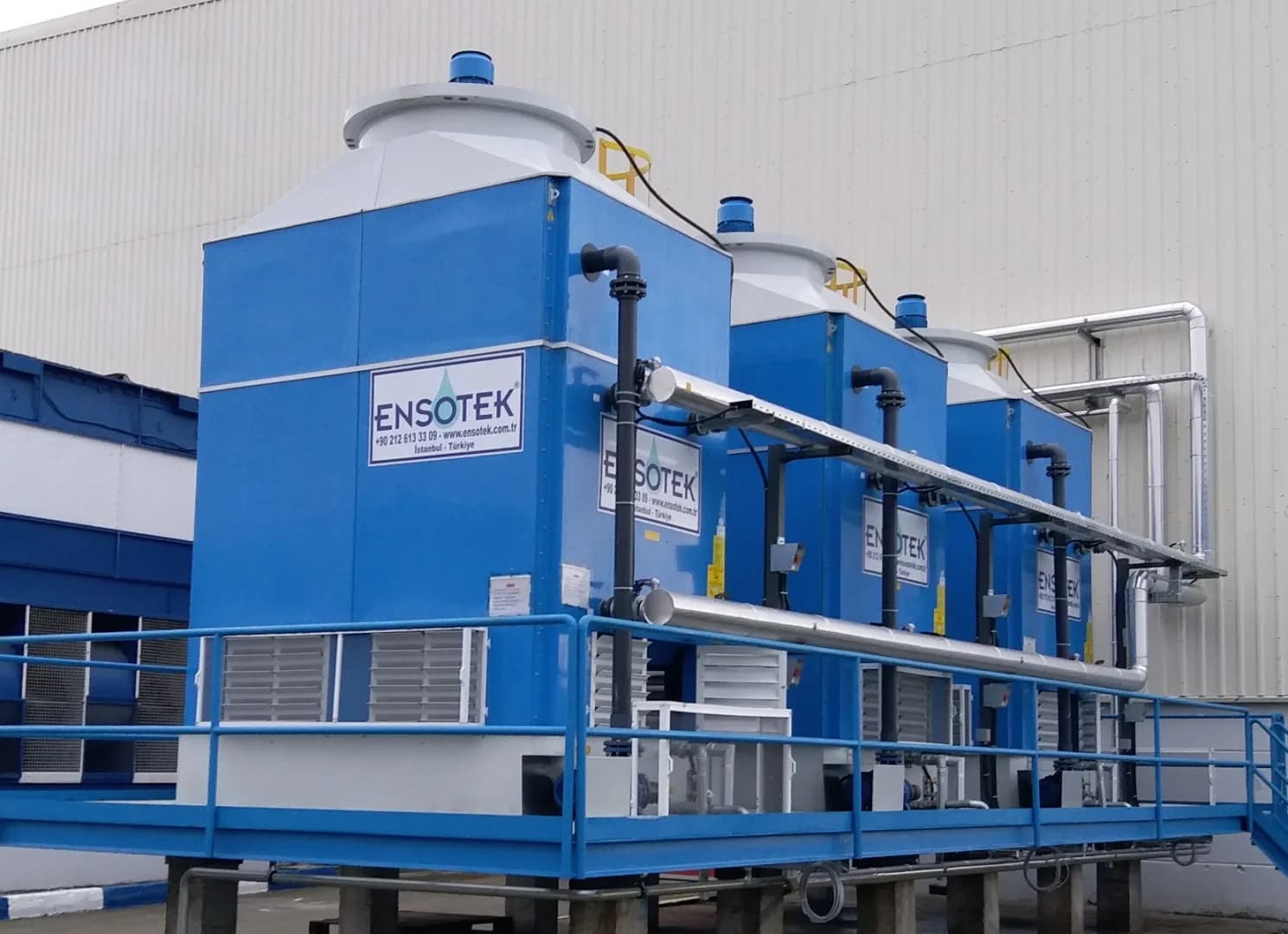
Spray-water loop and coil surface
Free cooling (dry operation) mode